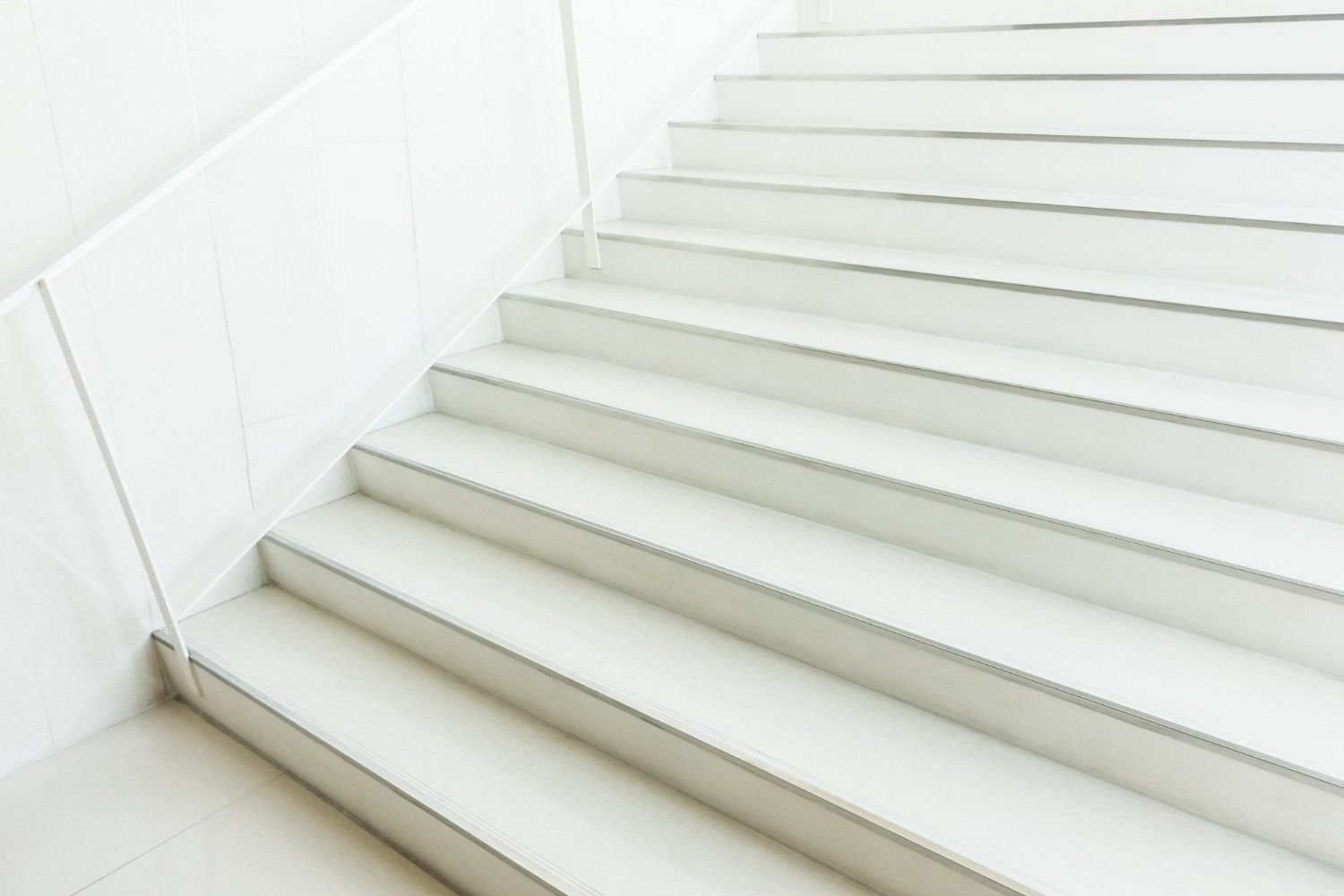


A staircase is one of the most visible transitions in a multilevel home, so it should not be treated as an isolated construction detail. The right stair treads can create a natural connection between floors, support the home’s interior style, and provide a durable walking surface. Whether the project involves new construction or the replacement of carpeted stairs, selecting the tread material early can prevent color, sizing, and installation problems later.
Begin With the Flooring Material
Start by reviewing the flooring that meets the staircase at the upper and lower levels. When hardwood flooring is being installed, using the same wood species on the stairs usually creates the most consistent appearance.
Species is only one part of the decision. Red oak, white oak, maple, hickory, and walnut each have different grain patterns and natural color variations. Even when the flooring and stairs are made from the same species, differences in stain, sheen, board selection, and finishing methods may make them look noticeably different.
Requesting physical samples is more reliable than selecting materials from a screen. Examine samples beside the flooring in both natural and artificial light. A finish that looks accurate in a showroom may appear warmer, darker, or more reflective inside the property.
Choose Between Prefinished and Unfinished Components
Prefinished stair components arrive with the stain and protective coating already applied. Contractors can cut and install them without completing several rounds of sanding, staining, drying, and coating at the job site.
This approach can reduce dust, odors, and interruptions inside an occupied home. It can also provide more consistent color and sheen across the staircase. Prefinished components are especially helpful when the project schedule does not allow several days for finishing and curing.
Unfinished treads remain useful when a contractor needs to create a stain mixture at the property or coordinate with flooring that will also be finished after installation. However, the labor, drying time, ventilation requirements, and possibility of uneven application should be considered before choosing this route.
Consider How the Staircase Is Built
The correct tread type depends on whether the project is a new staircase or a renovation.
Traditional full-thickness treads are commonly used in new construction or when the existing staircase is being rebuilt. They are installed directly as part of the stair structure and must meet the dimensional requirements of the project.
Retrofit treads are intended to cover structurally sound existing steps. They are frequently used when carpet is removed from a staircase and the homeowner wants a hardwood surface without rebuilding the stair system. Their thinner profile and attached nosing allow them to fit over the existing construction.
Before ordering retrofit products, the installer should inspect every step. Loose boards, squeaks, damaged substrates, protruding fasteners, and uneven surfaces should be corrected before the new material is installed.
Measure Every Step Carefully
Staircases that appear uniform often contain small dimensional differences. Measure each tread individually rather than assuming that one measurement applies to the entire flight.
Record the width, depth, nosing position, and wall conditions of every step. Note whether the staircase is closed on both sides or open on the left, right, or both sides. An exposed end may require a returned edge that provides a finished profile around the side of the tread.
Return direction is determined from the bottom of the staircase while looking upward. A staircase with an exposed right side generally requires right-return components, while an exposed left side requires left-return components. Open staircases may need returns on both ends.
Contractors should also consider how new material will affect riser height. Adding an overlay changes the relationship between adjacent steps, particularly at the top and bottom of the staircase. Local building requirements should be reviewed before installation begins.
Account for Traffic and Daily Use
Appearance matters, but the selected wood must also suit the property’s daily activity. Stairs in family homes, rental properties, offices, and retail environments may experience frequent foot traffic.
Harder wood species generally resist dents better than softer materials, although the protective finish also affects long-term performance. Households with children or pets may prefer visible grain patterns that make minor marks less noticeable.
Cleaning expectations should also be discussed. A staircase with a factory-applied coating can usually be maintained through regular dust removal and cleaning with products approved for finished hardwood. Excess water and harsh chemicals should be avoided because they may damage the coating or affect the joints.
Coordinate Treads, Risers, and Trim
A finished staircase includes more than its walking surfaces. Risers, landing materials, skirt boards, nosing, newel posts, balusters, and handrails all contribute to the final appearance.
White-painted risers can create contrast with stained hardwood treads, while matching wood risers produce a more uniform look. The choice should reflect the surrounding flooring, trim, and architectural style.
Planning these components together also helps avoid gaps, inconsistent finishes, and last-minute substitutions. Designers and contractors should confirm where each material ends, how transitions will be handled, and which pieces require field cutting.
Confirm the Details Before Ordering
Review the species, finish, dimensions, tread construction, return direction, quantity, and installation method before placing the order. Include extra material when the project has irregular steps or complicated cuts.
Early coordination with a stair-component supplier can help flooring dealers, contractors, builders, and designers choose products that fit both the construction requirements and the planned interior. Visit Wood Stair Co to review prefinished hardwood treads, risers, retrofit options, and related stair parts for upcoming residential and trade projects.