
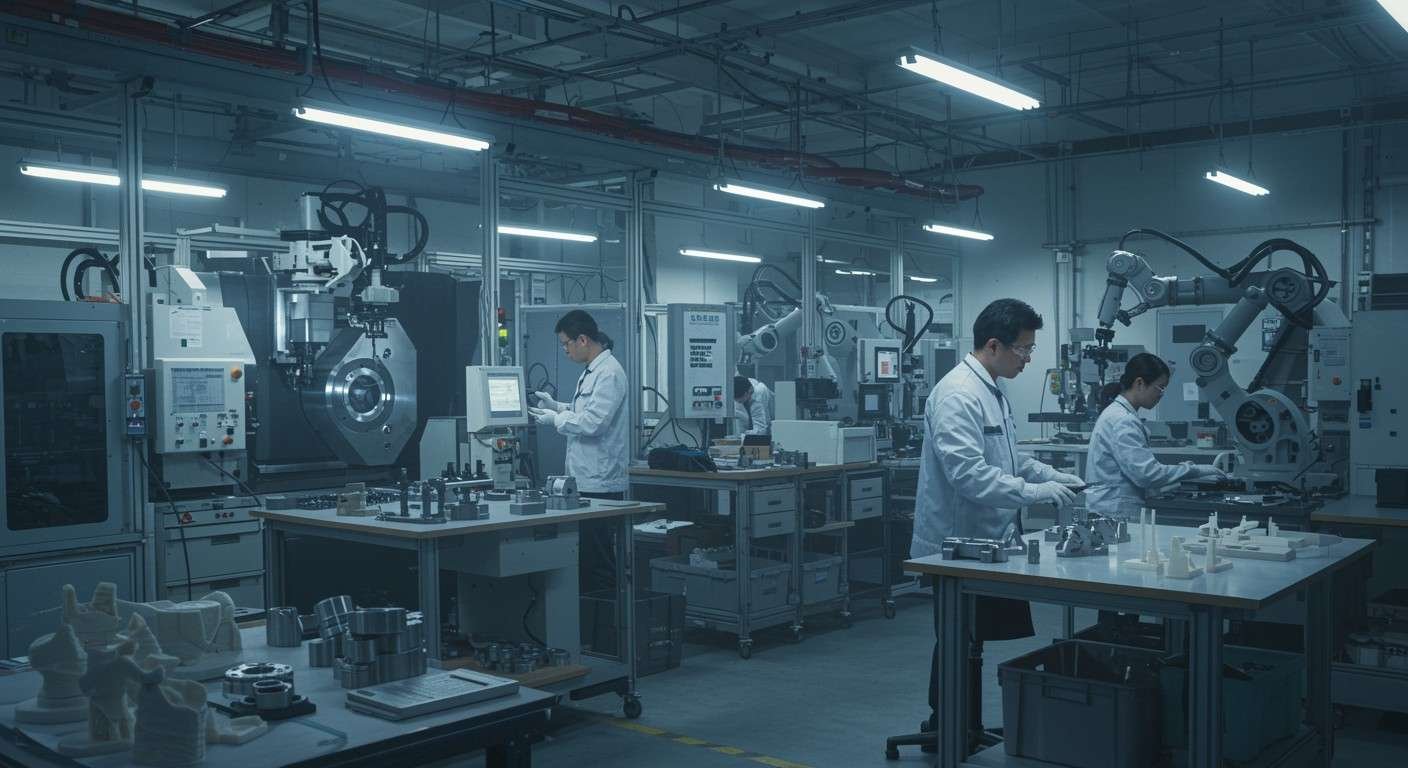


The transition from a conceptual sketch to a tangible, market-ready product is often the most treacherous phase of the engineering lifecycle. In high-stakes industries like automotive, aerospace, and consumer electronics, a single design flaw discovered during mass production can cost a fortune in recalls and retooling. To mitigate these risks, leading innovators are leveraging the speed and precision of china rapid prototype services to validate their designs in real-world conditions. By utilizing advanced additive and subtractive manufacturing techniques, engineers can now iterate their designs in days rather than months, ensuring that the final product is not only functional but also optimized for cost-effective manufacturing.
The Global Shift Toward Agile Product Development
The traditional manufacturing model was built on the premise of high-volume, low-variability production. However, the modern consumer landscape demands personalization and rapid innovation. This shift has forced developers to adopt agile methodologies where testing happens early and often. China has emerged as the global epicenter for this movement, offering an unparalleled ecosystem of raw materials, engineering talent, and logistics infrastructure.
Working with a centralized manufacturing hub allows designers to bridge the gap between imagination and physical reality. These facilities utilize a multi-disciplinary approach, combining traditional craftsmanship with the latest in robotics and automation. The result is a more resilient supply chain that can pivot to market changes without the typical overhead associated with localized, low-capacity production facilities.
Precision and Scalability in Professional CNC Prototyping
While 3D printing is excellent for aesthetic models, it often falls short when a prototype needs to endure mechanical stress or thermal loads. This is where cnc prototyping becomes indispensable. Computer Numerical Control (CNC) machining allows for the use of production-grade materials, such as aluminum, stainless steel, and high-performance plastics (PEEK, Delrin).
A CNC-machined prototype is nearly indistinguishable from a final production part. This high level of fidelity is critical for functional testing, such as fitment checks, airflow analysis, and load-bearing evaluations. According to insights from Forbes, the ability to produce functional prototypes at scale is a primary differentiator for hardware startups looking to secure venture capital and move toward a full-scale launch.
Core Advantages of CNC Over Traditional Modeling
1. Material Authenticity
CNC machining works with the exact metal or plastic intended for the final product, providing accurate data on weight, strength, and conductivity.
2. Exceptional Surface Finish
Modern 5-axis machines can achieve tolerances within microns and surface finishes that eliminate the need for secondary polishing or bead blasting.
3. Geometric Complexity
Advanced software allows for the creation of intricate internal geometries and undercut features that would be impossible to achieve with manual milling or lathe work.
Navigating the Competitive Landscape of China Rapid Prototype
When selecting a partner for a china rapid prototype project, transparency and communication are just as important as the machinery. The most successful partnerships are those where the manufacturer acts as an extension of the design team. This involves providing Design for Manufacturing (DFM) feedback early in the process.
A reputable manufacturer will analyze your CAD files and suggest modifications that could reduce material waste or shorten machining time. This proactive approach doesn’t just save money; it improves the structural integrity of the part. In a competitive market, having a partner who understands the nuances of international quality standards (such as ISO 9001) ensures that your intellectual property is protected and your specifications are met with 100% accuracy.
Technical Factors Driving Prototype Quality
Multi-Axis Machining Capabilities
The integration of 3-axis, 4-axis, and 5-axis milling ensures that complex parts can be machined in a single setup, reducing the cumulative error that occurs when a part is moved between different machines.
Advanced Post-Processing Options
A prototype is rarely finished once it leaves the machine. High-quality vendors offer an array of finishes, including anodizing, powder coating, electroplating, and silk screening, to give the part a “retail-ready” appearance.
Rapid Tooling and Small Batch Production
Sometimes, you need more than one prototype but less than ten thousand parts. Rapid tooling fills this gap by creating temporary molds that allow for the injection molding of 50 to 500 parts in production-grade resins.
Real-Time Quality Inspection
Utilizing Coordinate Measuring Machines (CMM) and laser scanning ensures that the physical part matches the digital blueprint exactly. This verification is essential for industries where a deviation of 0.05mm can cause a system failure.
Balancing Speed with Engineering Integrity
The “Rapid” in rapid prototyping should never imply a compromise in quality. The true value of a cnc prototyping service lies in its ability to deliver speed without sacrifice. By automating the toolpath generation and utilizing high-speed spindles, modern shops can produce complex metal components in a fraction of the time it took a decade ago.
For the international developer, this means the ability to fail fast and fix faster. If a prototype reveals an interference fit or a stress fracture, the design can be modified in CAD and a new version can be on the machine within hours. This iterative loop is the engine of modern innovation, allowing companies to push the boundaries of what is possible in automotive design, medical devices, and consumer tech.
The Economic Impact of Optimized Prototyping
Many firms hesitate to invest in high-fidelity prototypes due to the perceived cost. However, the ROI of professional prototyping is found in the “Cost of Error.” Correcting a design mistake in the prototyping phase might cost five hundred dollars; correcting that same mistake once the injection molds have been cut could cost fifty thousand dollars.
By utilizing a china rapid prototype facility, companies can access premium manufacturing at a price point that encourages experimentation. This economic freedom allows engineers to test three or four different design variations simultaneously, selecting the most efficient one for final production. It is a data-driven approach to manufacturing that eliminates guesswork and maximizes the chances of a successful product launch.
Finalize Your Design with Precision
The journey from a digital concept to a physical product is a test of engineering discipline and strategic planning. By leveraging the combined power of china rapid prototype efficiency and the mechanical precision of cnc prototyping, you ensure that your innovation is built on a foundation of verified data and high-quality craftsmanship.