
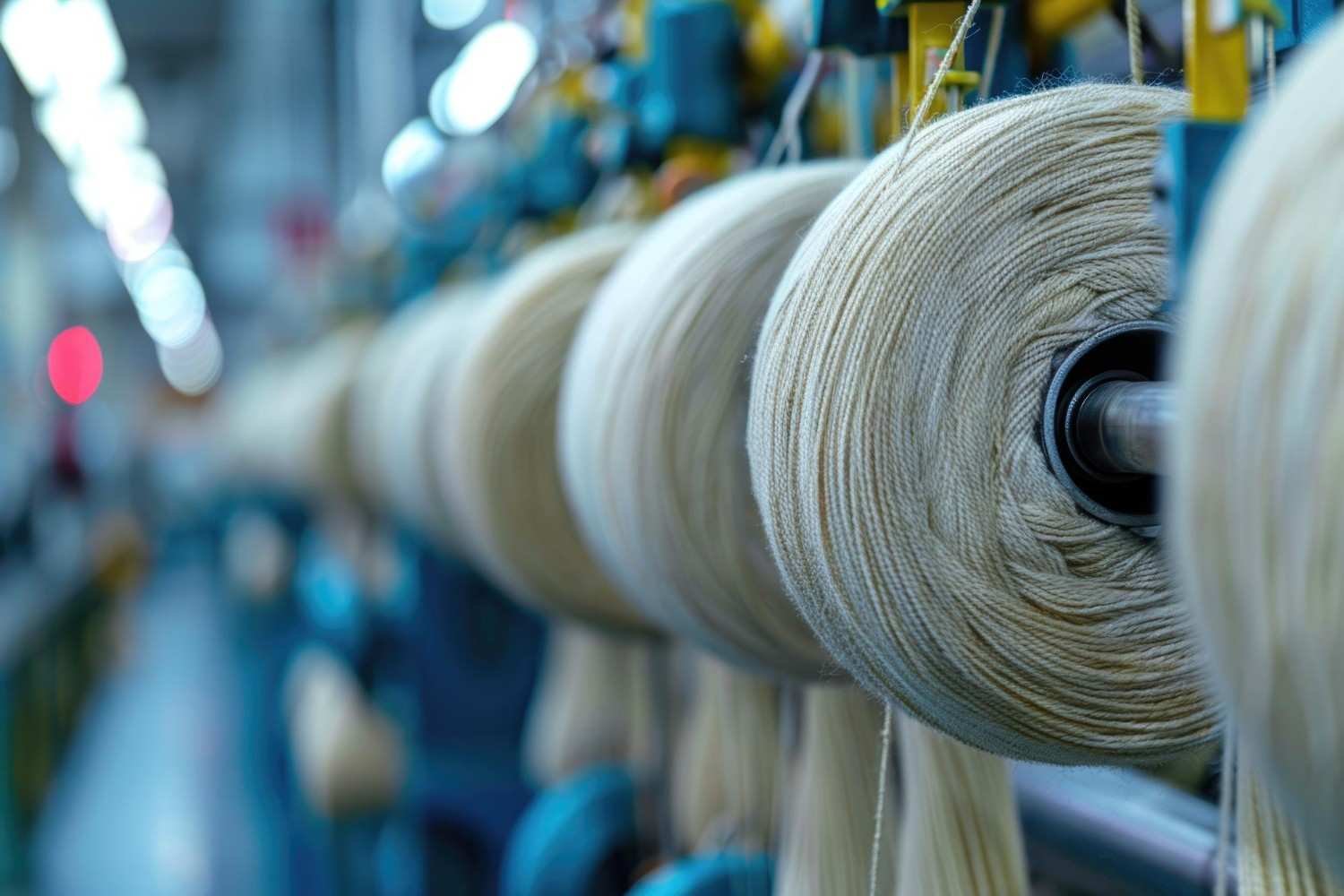


A manufacturing line breakdown often stems from the smallest, most overlooked component in the facility. We frequently celebrate massive industrial milestones like highly automated factories, sprawling commercial greenhouses, and high-speed logistics networks. Yet, the daily success of these multi-million-dollar setups depends entirely on specialized, foundational materials that function completely behind the scenes. Across high-stress environments like deep-sea aquaculture, civil infrastructure, and heavy automotive assembly, traditional twisted cords are hitting their physical limits. To prevent premature wear and costly system overhauls, industry leads are moving away from multi-strand textiles, trusting high-precision monofilament yarn manufacturers to supply the structural integrity their operations require.
For supply chain heads and procurement directors, choosing an industrial-grade fiber has moved far beyond a routine line-item purchase. It has become a crucial commercial choice that dictates product life expectancy, factory downtime, and overall business profitability.
The Architectural Reality: What Makes Monofilaments Unique
To truly understand the value of high-performance technical strands, you need to look closely at how they differ from standard commercial yarns. The vast majority of ropes, fabrics, and structural nets are multifilament systems. They are built by tightly twisting dozens of microscopic, hair-like fibers together. While this process offers a high degree of flexibility, it creates a massive, vulnerable surface area. This configuration leaves countless micro-voids where grit, water, industrial chemicals, and organic bacteria can gather, slowly rotting the material from the inside out.
A technical monofilament completely bypasses this structural weakness. It is manufactured by pushing molten polymer through a precision-engineered die to create a single, continuous, solid strand of uniform thickness. This streamlined manufacturing process gives the final material clear physical advantages:
- Zero Moisture Absorption: Water cannot work its way into the center, preventing mold, fiber decay, and the heavy weight gain that ruins marine equipment.
- Flawless Surface Smoothness: The slick exterior cuts down on surface friction, which is vital for high-speed automated sewing machines and precision filtration systems.
- Stable Tension Resistance: The strand holds its exact shape and resists stretching or sagging, even under constant mechanical stress over many years.
Formulating the Chemistry: Matching Polymers to Environmental Demands
Industrial applications face wildly different stress factors depending on their environment. Modern chemical engineering allows producers to adjust the polymer mix, tuning the final strand to match the specific physical challenges it will face.
Polyamide Formulations for Heavy-Impact Friction
When a material undergoes continuous mechanical scraping, dragging, or rough contact, Nylon or Polyamide formulations are the absolute industry standard. This polymer family features a strong structural memory and natural elasticity. It absorbs sharp impacts and heavy abrasive contact without breaking, making it the perfect material for heavy-duty industrial brush bristles, conveyor guides, and commercial trimmer lines.
Polyolefins for Chemical Defense and Weight Savings
Polypropylene and Polyethylene are heavily favored when a project demands complete resistance to chemical degradation. These lightweight materials possess an inert chemical structure, meaning they refuse to react with aggressive acids, alkaline industrial washes, or organic solvents. They are widely utilized in industrial filter meshes, protective agricultural nets, and marine setups where salt-water corrosion quickly ruins lesser plastics.
Polyester Blends for Unyielding Thermal Stability
When your industrial equipment must operate reliably under blazing summer suns or inside high-heat processing environments, Polyester provides the ideal answer. It boasts a remarkably high melting point and resists stretching or warping under intense thermal loads. This exceptional dimensional stability makes it an indispensable asset for automotive components, outdoor structural meshes, and heavy-duty geotextiles.
Smart Procurement: Eliminating Friction in Your Supply Chain
Sourcing high-volume industrial components becomes increasingly complex as your business scales up to meet global demand. The international market is packed with third-party brokers and trading intermediaries offering cheap materials, but experienced procurement teams prioritize batch consistency, material traceability, and strict quality control over minor upfront savings. According to an extensive operational analysis by Entrepreneur on business supplier networks, companies that build direct, transparent relationships with primary component producers experience a 45% reduction in supply chain disruptions compared to those relying on multi-tier trading brokers.
Partnering directly with established monofilament yarn manufacturers provides three major structural safeguards to your business:
Absolute Gauge Uniformity Across Massive Volumes
Precision machinery demands completely predictable inputs. A micro-millimeter deviation in strand diameter creates an immediate structural weak spot that can snap under tension, shutting down an entire production line and destroying profits. Dedicated factories utilize real-time laser monitoring during the extrusion phase to ensure that the first meter on a spool is identical to the last.
Climate-Specific Additive Blending
A polymer strand designed for a deep-sea fishing trawler in the North Atlantic requires radically different properties than a mesh meant to sit under the scorching heat of an agricultural farm. Direct manufacturers can blend specialized UV inhibitors, flame retardants, or anti-static agents directly into the raw resin batch before extrusion, ensuring the material survives its destination climate.
Streamlined Logistics and Customs Support
When dealing with international or large-scale domestic distribution, shipping delays are incredibly costly. A veteran manufacturing partner handles the complexities of bulk logistics, customs declarations, and international packing compliance, ensuring your warehouse shelves stay stocked and your assembly lines stay active.
Where Precision Polymers Drive Modern Infrastructure
The sheer variety of industries relying on these single-strand synthetics is a testament to their versatile design.
Advanced Separation and Filtration Systems
From municipal wastewater facilities to automotive fuel delivery lines, precision-woven monofilament meshes act as the ultimate physical gatekeeper. Their perfectly uniform openings catch microscopic contaminants while maintaining a high flow rate, allowing factories to maintain strict purity standards without choking their operational throughput.
Civil Engineering and Soil Stabilization
Heavy geotextile fabrics woven from thick-gauge polymers are routinely buried beneath national highways, railway beds, and river embankments. They allow water to drain naturally while keeping the underlying soil firmly in place, acting as an invisible structural grid that protects multi-million dollar infrastructure investments from erosion.
Commercial Agriculture and Crop Security
Modern farming relies heavily on environmental control. Heavy-duty nets made from specialized polymers protect high-value crops from devastating hail storms, intense sun scalding, and destructive pests, providing farmers with predictable yields season after season.
Future-Proof Your Production Standards
The raw components you integrate into your supply chain establish the absolute limits of what your final products can achieve. Counting on cut-rate material formulas or erratic suppliers puts your brand’s market reputation at risk and drives up your long-term maintenance costs. Investing in precision-engineered synthetic strands is a direct path to higher product durability, fewer manufacturing failures, and long-term peace of mind.
Take the guesswork out of your material sourcing by partnering with industry-recognized technical expertise. Visit Shanthi Industries today to view a comprehensive portfolio of high-performance polymer solutions, request tailored samples for your specific application, and consult with an engineering team ready to build the exact fiber your next project demands.