
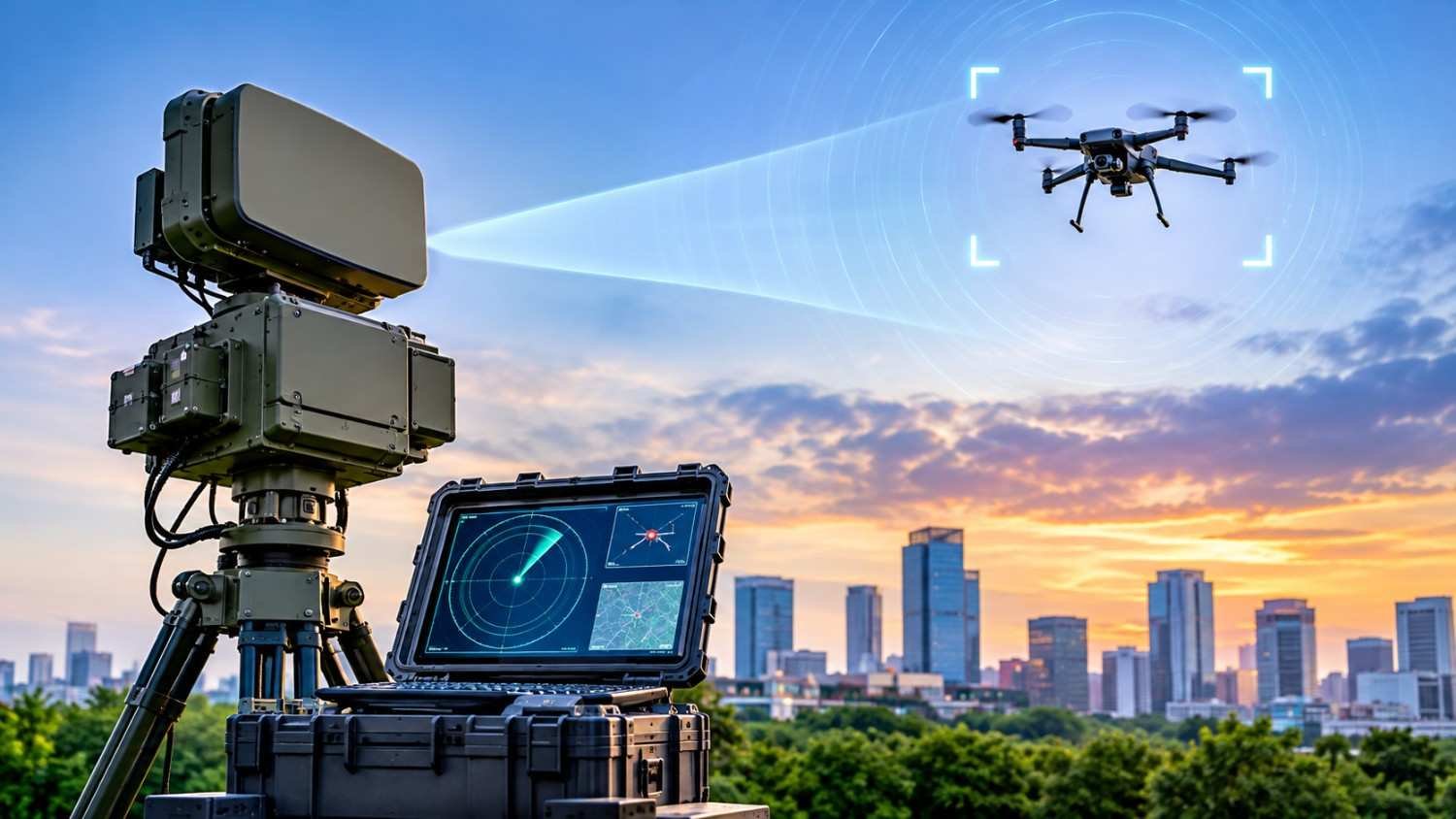


The development of unmanned aerial technology has changed the way security planners think about aerial threats. Traditional protection methods may not be suitable for every type of drone, particularly when an aerial object is difficult to monitor or when electronic countermeasures are not appropriate. Interceptor technology offers another approach, and a modern counter drone system may incorporate autonomous aerial platforms as part of a broader protection strategy.
What Is an Interceptor Drone?
An interceptor drone is an unmanned aerial platform designed to engage or intercept another aerial object.
Unlike conventional surveillance drones, which are primarily intended to observe, record, or inspect an area, interceptor platforms are developed for specific security and defence applications.
Their role is to provide an alternative response option within an authorised counter-UAS framework.
Why Interceptor Technology Is Gaining Attention
Drone threats vary in size, speed, flight behaviour, and operational purpose. A single mitigation method may not be suitable for every situation.
Interceptor technology is attracting interest because it can contribute to a layered response architecture.
Potential advantages include:
- An aerial response option against selected drone threats.
- Integration with detection and tracking infrastructure.
- Support for multi-layer security planning.
- Greater flexibility in selecting suitable response capabilities.
Actual performance depends on the platform, operational environment, and system integration.
Understanding Zombee® Interceptor Technology
Indrajaal’s published product portfolio includes Zombee®, an autonomous interceptor drone designed for aerial threat engagement.
The company’s broader approach connects detection, command-and-control, and mitigation technologies rather than treating interception as an isolated capability.
This is important because an interceptor requires relevant information about the aerial object and an appropriate operational decision before deployment.
Integrating Interceptors into Drone Defence
A complete drone defence architecture may combine several capabilities.
Detection
Sensors identify aerial activity that requires attention.
Tracking and assessment
Available information helps security teams understand the object’s movement and potential risk.
Interceptor coordination
Where authorised and appropriate, an interceptor platform may form part of the selected response.
Operational monitoring
The system must support oversight, communication, and incident documentation.
Challenges That Require Continued Development
Interceptor technology also presents important considerations.
These include identification accuracy, operating conditions, safety around populated areas, system reliability, and regulatory authorisation.
The presence of an interceptor does not remove the need for responsible decision-making. Every deployment must be evaluated against the operational environment and applicable rules.
Frequently Asked Questions
1. What is an interceptor drone used for?
It is designed to engage or intercept selected aerial threats as part of an authorised counter-UAS response.
2. How is an interceptor different from a surveillance drone?
A surveillance drone primarily gathers information, whereas an interceptor is designed for aerial engagement against another object.
3. What is Zombee®?
Zombee® is an autonomous interceptor drone included in Indrajaal’s published counter-drone technology portfolio.
4. Can interceptor drones work independently?
Their operational role depends on the wider detection, tracking, command, and response architecture, along with applicable authorisations.